
UPDATE: Trump confirms US strike in Venezuela, says President Nicolás Maduro has been ‘captured’ (January 3, 2026)
“Well you know they always say boots on the ground. We aren’t afraid of boots on the ground… We aren’t afraid of it. We don’t mind saying it. We are going to make sure that country is run properly. This is a very dangerous attack… We are there now. We are ready to go again if we have to. We are going to run the country right… It’s going to make a lot of money.”
⁃ Donald Trump (January 3, 2026)
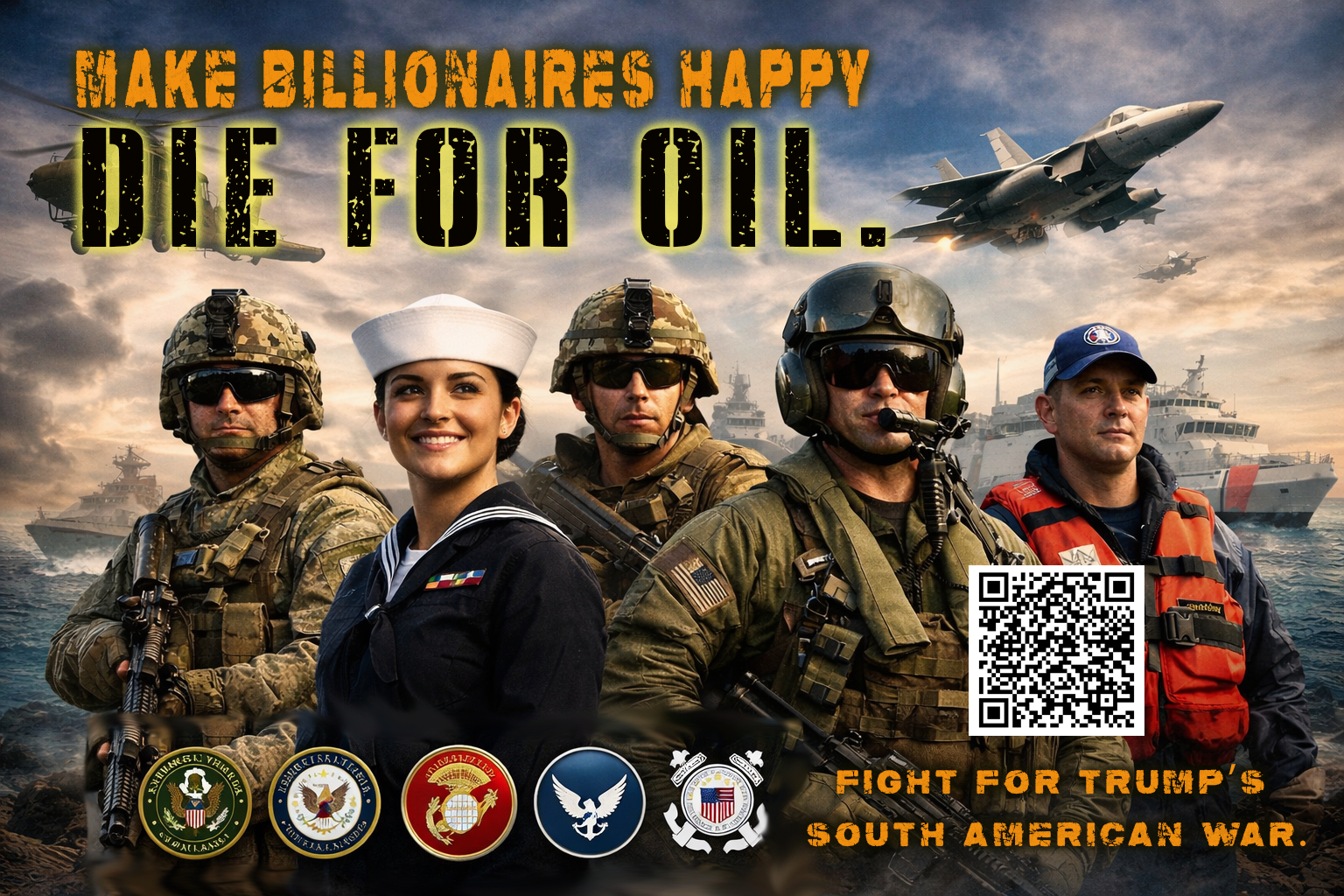
The Trump administration has taken aggressive actions focused on Venezuela’s oil sector — including ordering a “total and complete blockade” of sanctioned oil tankers entering and leaving Venezuela and intensifying military presence in the Caribbean. Trump and his aides have framed these measures as responses to drug trafficking, terrorism, and “stolen assets,” but critics argue the rhetoric clearly centers on oil resources.
Trump has publicly demanded that Venezuela return oil and other assets he claims were “stolen.” In public remarks, he has said Venezuela “took all of our energy rights” and expressed a desire to reclaim those assets — language that critics interpret as tying U.S. policy directly to oil interests.
- U.S. government rhetoric emphasizes security concerns (drug trafficking, terrorism) rather than openly saying the objective is control of oil.
- Actions taken — especially the tankers blockade and seizing oil shipments — directly impact Venezuela’s oil revenue and strengthen the perception that oil is a central factor in U.S. policy.
- Critics and some news outlets explicitly characterize the escalation as related to oil interests, though this interpretation is debated and not acknowledged as policy by U.S. officials.
- Critically and practically: Many observers — including foreign governments and independent analysts — see the focus on Venezuela’s oil as a major driver of U.S. actions, and some describe the escalation as effectively about controlling or disrupting Venezuelan oil resources.
Oil as a strategic prize
- Iraq (2003): Iraq had the world’s 2nd-largest proven oil reserves at the time. Control over future oil access, pricing stability, and regional leverage were widely seen by critics as underlying motives.
- Venezuela (today): Venezuela has the largest proven oil reserves in the world. Its heavy crude is especially valuable for certain refineries, including some in the U.S.
In both cases:
Oil isn’t just fuel — it’s geopolitical power, revenue, and influence.
Public justification vs. underlying incentives
- Iraq: Public justification = Weapons of Mass Destruction, terrorism, spreading democracy Reality = WMDs were never found; oil contracts shifted heavily toward Western firms afterward.
- Venezuela: Public justification = drug trafficking, authoritarianism, migration, national security Reality = U.S. actions overwhelmingly target oil exports, tankers, and PDVSA assets.
Pattern:
Security and moral arguments are foregrounded; energy interests are downstream beneficiaries.
They are similar in structure but different in execution:
✔ Oil is central in both
✔ Moral/security justifications mask economic incentives
✔ Regime change is the strategic goal