
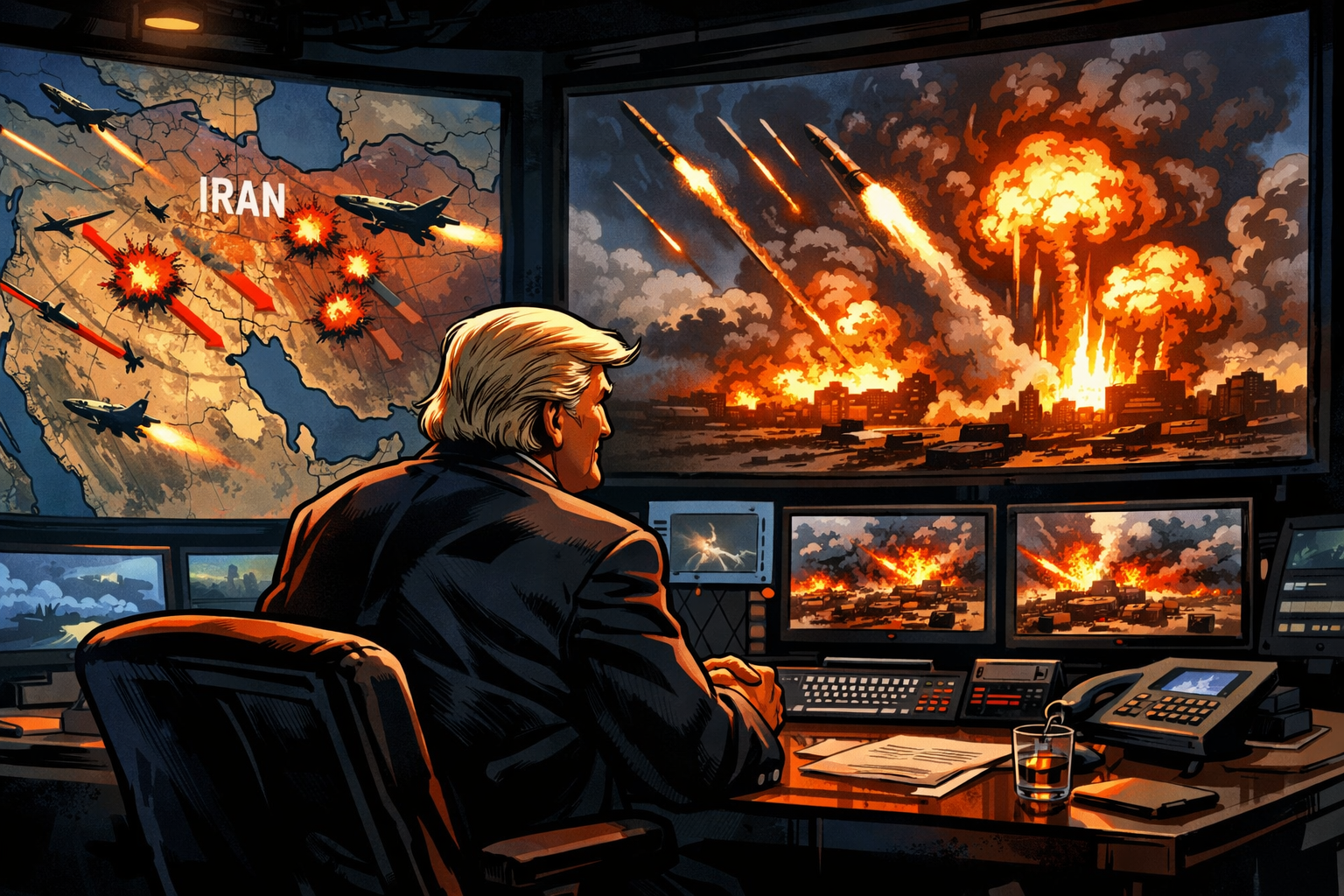
There is major political and legal debate right now about President Donald Trump’s military action against Iran. Critics from legal scholars, lawmakers, and international law experts are arguing it may be illegal for several different reasons. Here are the main arguments people are making.
1. Critics say it violates the U.S. Constitution
Many critics argue that only Congress can declare war under the Constitution.
- Article I, Section 8 gives Congress the power to declare war.
- Critics say Trump ordered major military operations without congressional approval.
Several lawmakers from both parties have raised this argument:
- Rep. Thomas Massie (R) said there was no “imminent threat” justifying the strikes.
- Sen. Bernie Sanders called the attack “grossly unconstitutional.”
- Rep. Jim Himes said launching strikes without Congress violates the Constitution’s war powers.
Legal scholars say presidents can use force only in emergencies, such as stopping an immediate attack. Without that, Congress must authorize war.
2. The War Powers Resolution issue
Another major criticism is that the action violates the War Powers Resolution of 1973.
That law says the president must:
- Notify Congress within 48 hours of military action.
- Stop hostilities after 60 days unless Congress approves.
Many lawmakers are trying to pass a War Powers resolution to force a vote on the war.
Some critics say the president “usurped Congress’s war powers” by acting alone.
3. Critics say there was no imminent threat
Another key argument:
- Military force without Congress is usually justified only if the U.S. faces an immediate attack.
Critics say:
- There was no evidence Iran was about to attack the U.S.
- Claims about nuclear threats were not supported by intelligence evidence.
Because of that, some analysts call it a “preventive war”, which is legally controversial.
4. International law arguments
Some international law experts argue the strikes violate the UN Charter.
International law generally allows force only when:
- The UN Security Council authorizes it, or
- A country is acting in self-defense after an armed attack.
Experts say the U.S. did neither, making the attack potentially an act of aggression under international law.