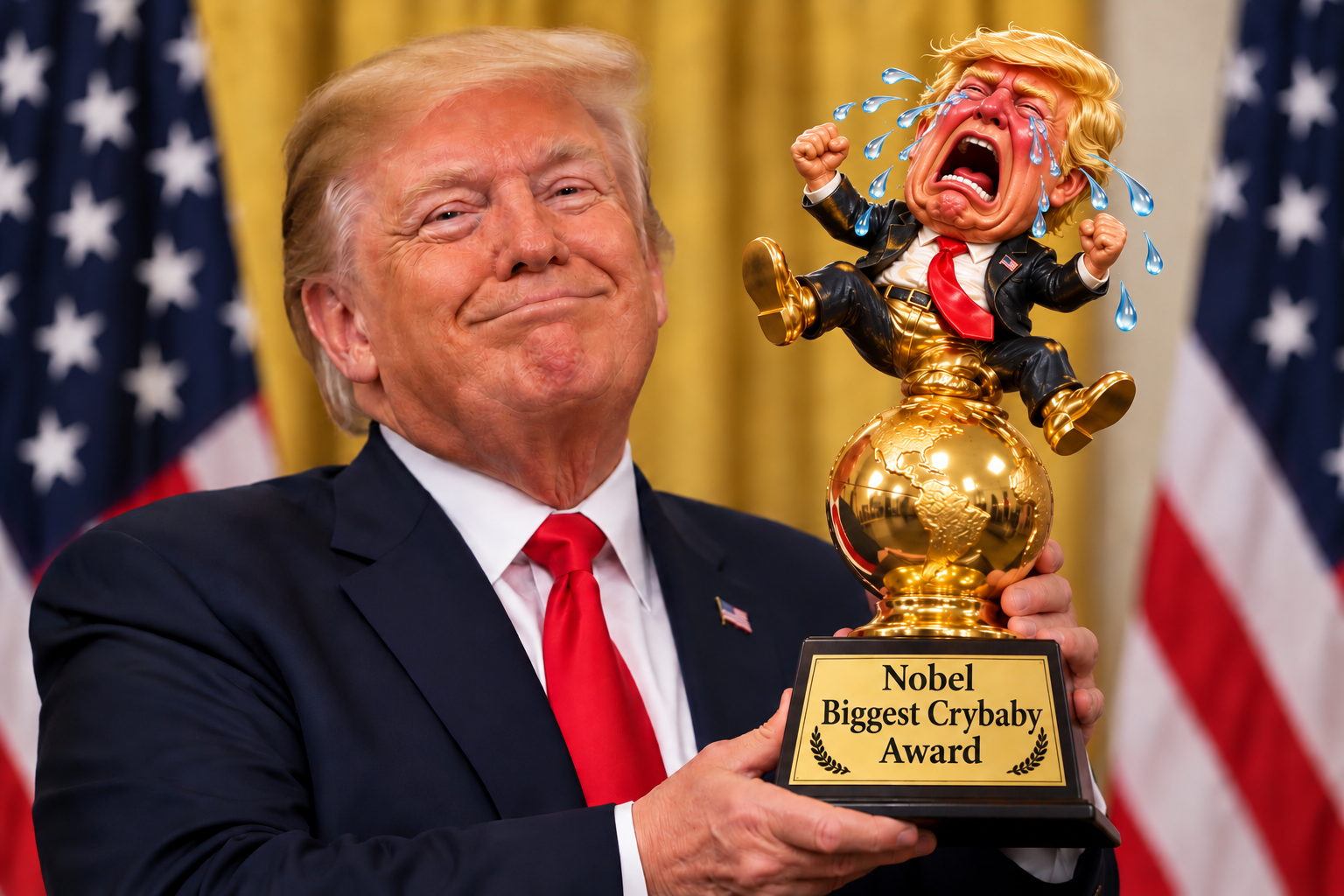
Trump keeps whining like a petulant, spoiled child that he deserves the Nobel Peace Prize for ending at least eight wars, which is a dubious lie.
Trump deserves some credit with other leaders for helping negotiate several ceasefires and diplomatic agreements, particularly involving Israel and Hamas, Thailand and Cambodia and Armenia and Azerbaijan. He wants to take credit for other leaders trying to bring about peace.
Two of his eight examples were not active wars. Several agreements failed to stop subsequent violence. Some peace processes remain incomplete. His role in certain ceasefires is disputed. Trump wants to take credit for efforts also made by other leaders.
The United States subsequently entered a new very costly war with Iran costing billiosn a day, which is going badly and considered a possible endless war, which he campaigned against.
Verdict: MISLEADING.
- Israel–Hamas: NOT SETTLED
According to an Associated Press report published today, October 10, 2026: Israel continues military strikes in Gaza. More than 1,400 Palestinians have reportedly been killed since the October 2025 ceasefire, according to Gaza health authorities. Hamas has not completed disarmament. Israeli forces continue occupying substantial portions of Gaza. Plans for a new Palestinian administration and reconstruction remain stalled.
Conclusion: Trump helped negotiate a ceasefire and hostage releases, but the conflict is not settled. - Thailand–Cambodia: NOT SETTLED
Trump helped negotiate a ceasefire in July 2025. However, fighting resumed in December 2025, and another ceasefire was necessary. As recently as October 9, 2026, Cambodia was urging Thailand to resume negotiations over their disputed border. Both governments continue to disagree about territorial boundaries and responsibility for previous fighting.
Conclusion: The latest ceasefire has reduced fighting, but the territorial dispute remains unresolved. - Armenia–Azerbaijan: NOT SETTLED
In August 2025, Trump hosted the leaders of Armenia and Azerbaijan at the White House. They agreed on a peace framework, including recognition of territorial sovereignty and commitments against using force.
However, as of October 2026, the formal peace treaty still needs to be signed and ratified.
On October 9, 2026, the Norwegian Nobel Committee awarded the 2026 Nobel Peace Prize to Navanethem “Navi” Pillay, a South African jurist and former United Nations High Commissioner for Human Rights.
The committee recognized her decades of work defending human rights, strengthening international law, and pursuing accountability for war crimes and genocide.
On October 9, 2026, the Peace Research Institute Oslo published an analysis titled:
“Trump has zero chance of winning the Nobel Peace Prize.”
The article argues that Donald Trump’s overall record contradicts the principles of the Nobel Peace Prize.
Gjerløw identifies several reasons for why Trump is not going to bget the recognition he whines about:
- War with Iran: Trump initiated a war with Iran, raising questions about his commitment to peace.
- Military action against Venezuela: His administration used military force rather than relying exclusively on diplomacy.
- Threats against sovereign territories: Trump repeatedly threatened to take control of territories belonging to other nations.
- Possible war crimes: A September 2026 United Nations report raised concerns about possible U.S. war crimes involving civilian casualties during military operations against Iran.
- Overall contribution to peace: The Nobel Peace Prize considers a candidate’s broader record, not simply the number of conflicts the candidate claims to have resolved.
The article’s central argument
Gjerløw writes:
“Trump’s recent record does not withstand that test.”
He concludes that the Nobel Committee should recognize individuals who have made genuine contributions to building peace rather than those who claim the most credit for it.
Researcher Haakon Gjerløw argued that Trump’s overall record does not satisfy the standards established by Alfred Nobel, despite his claims of diplomatic achievements. This was an expert assessment, not an official decision about Trump’s eligibility.
Alfred Nobel’s original criteria emphasize fraternity between nations, reducing standing armies, and promoting peace.
The central question is whether Trump’s overall actions have advanced those goals.
His supporters say his diplomatic achievements have. His critics argue that military escalation, threats against other nations, and weakened international cooperation outweigh those achievements.